
Peak sun hours by state, for solar surveillance trailers
Click your state. Its solar zone decides what a solar trailer or solar camera unit can carry through the darkest month of the year, and this page shows why.
Use this map to size solar for a surveillance trailer or camera unit anywhere in the United States: find your state's peak sun hours, see what each solar array delivers in the worst month, and check the winter plan before you build. Zones cross state lines, so each state shows its dominant zone and the four Zone 5 pockets are drawn separately. It is the same map and sizing table Build a Trailer plans with.
Peak sun hours by state, as a table
What a peak sun hour is
A panel's wattage is what it makes under full sun, 1,000 watts per square metre. No site gets that all day. A peak sun hour adds up the day's actual light and expresses it as full-sun hours: five peak sun hours is a day whose sunlight, dawn to dusk, was worth five hours of full sun.
The zones group the country by that number. Panel watts × peak sun hours × losses is the day's harvest.
Solar trailer sizing: the worst month decides, not the summer
The same 1,180 W MAST array, five zones, two seasons. A battery stores days of energy, not months, so what the array delivers in the darkest month is the number that decides whether the cameras stay up.
Show Sharpvue's full sizing table
| Array (W) | Zone 1 (W) | Zone 2 (W) | Zone 3 (W) | Zone 4 (W) | Zone 5+ (W) |
|---|---|---|---|---|---|
| 100 | 14 | 13 | 10 | 7 | 4 |
| 200 | 27 | 25 | 19 | 13 | 7 |
| 300 | 45 | 35 | 27 | 18 | 10 |
| 400 | 54 | 50 | 38 | 26 | 14 |
| 600 | 90 | 70 | 54 | 39 | 20 |
| 800 | 108 | 100 | 76 | 52 | 28 |
| 1,200 | 180 | 140 | 108 | 72 | 40 |
| 1,600 | 214 | 192 | 148 | 104 | 58 |
Sun hours and system losses are already inside these figures. Sizes between rows are interpolated. The runtime arithmetic is in the runtime guide.
Prepare the site for solar
The zone sets the ceiling. Where the trailer is parked and what it carries decide how close to it you get.
Face the panels south
Within 45° either way. East or west takes about four times longer to recharge in winter; north never recovers.
Walk the site for winter shadows
The December sun stays low. Anything on the south side that is harmless in June can shade the panels all afternoon.
Keep the glass clear
Snow, dust and pollen left on the panels can zero a day's harvest. Add a wipe-down to the site walk after a storm.
Mind the cold
Lithium banks will not charge below freezing unless heated. Go into a cold snap with the bank full.
Mind the heat
In the Southwest the array is rarely the problem. Airflow around the enclosure protects panel output and battery life.
Count every watt, around the clock
Base load, each camera, the speaker and any satellite uplink draw 24 hours a day. A Starlink Mini alone is 32.5 W.
Keep a reserve for a bad week
A MAST build targets seven days with no sun and must clear five. The power budget in Build a Trailer shows where yours lands.
Decide the winter plan before shipping
In Zone 4 and 5: a Sharpvue Generator on the build, or a plug-in recharge every 6 to 10 days through the winter.
Pick the solar trailer or unit for your zone
Zones 1 to 3
Solar alone, sized to the load
Any Sharpvue solar unit runs here on sun with a sensible camera list. In Zone 3, let the power budget confirm the December margin.
Zone 4
Solar plus a winter plan
The MAST runs on sun from spring to fall and needs a Sharpvue Generator or a scheduled plug-in recharge through the winter.
Zone 5+
Grid, generator or scheduled recharge first
Choose the AC-powered PSU where there is an outlet, or a MAST with the generator, and count the solar harvest as bonus runtime.
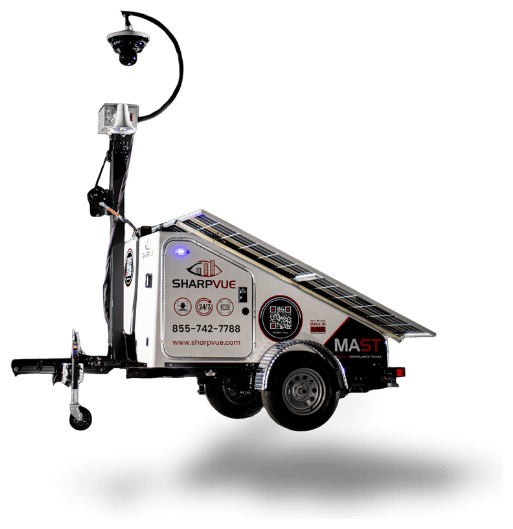 MASTSolar, 1,180 W arrayRated Zones 1–3
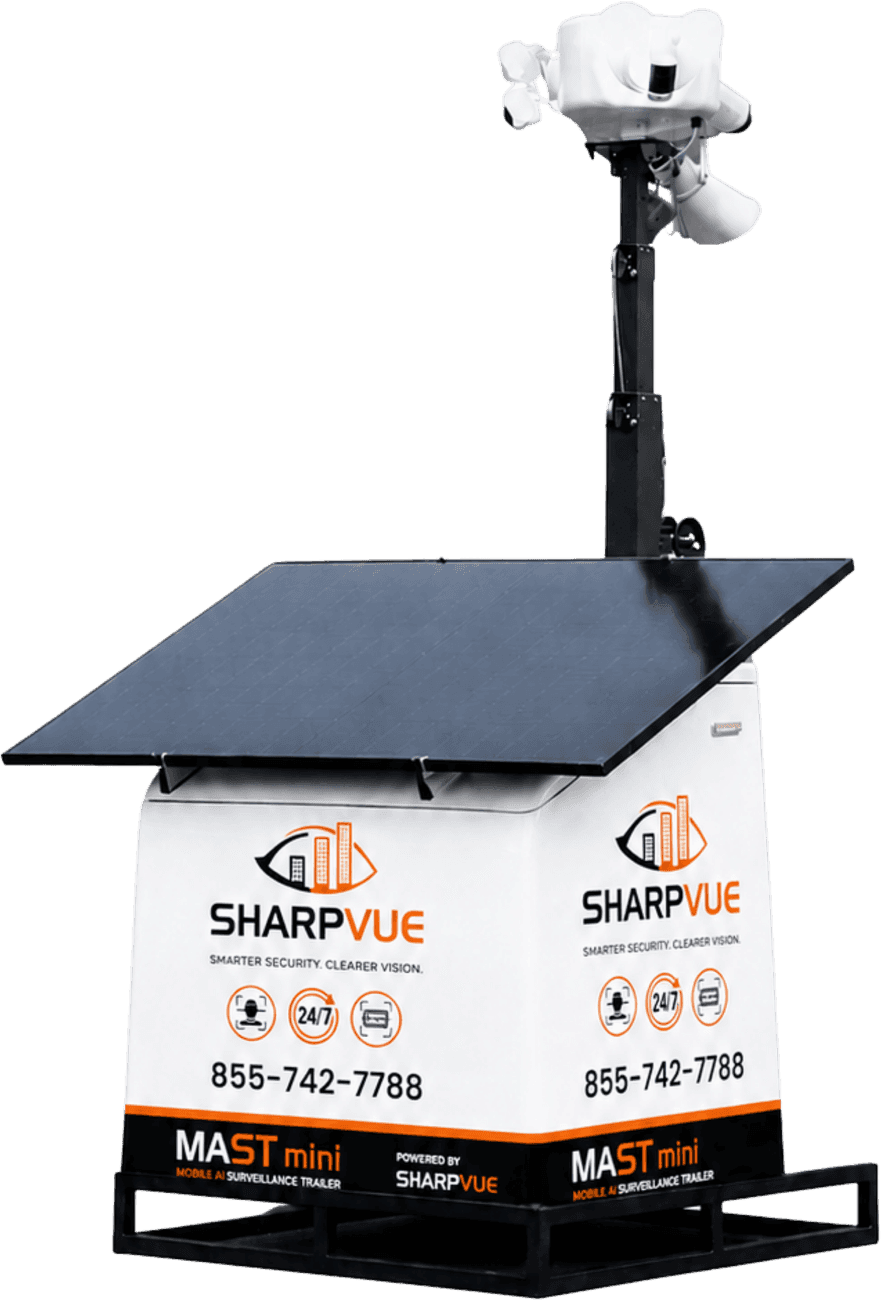 MAST-miniSolar, 410 W arrayRated Zones 1–3
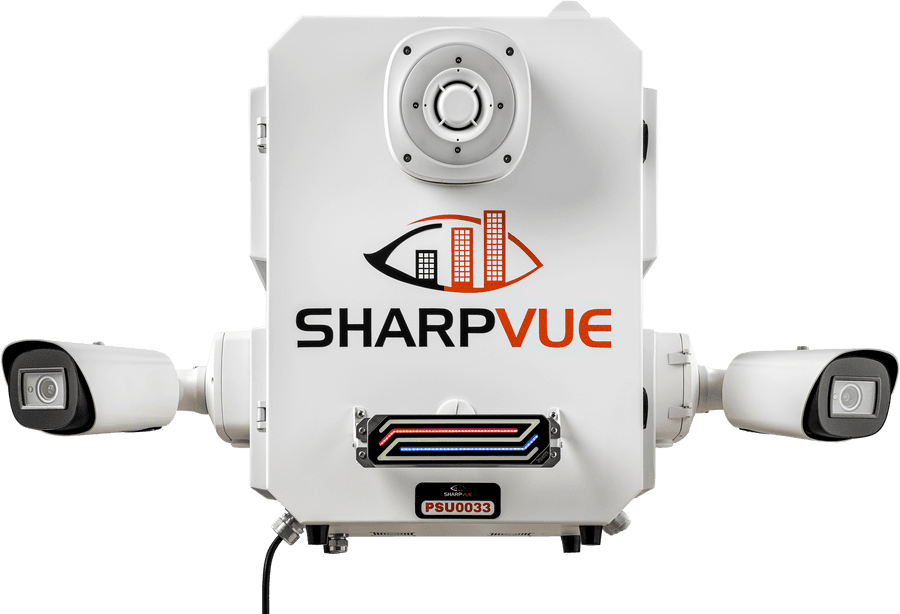 PSUAC power, battery backupRated All zones
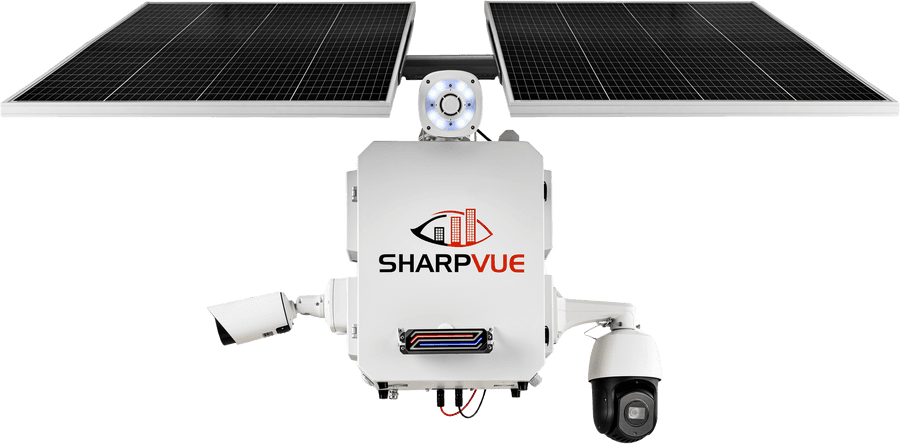 SPSUSolar, 400 W arrayRated Zones 1–3
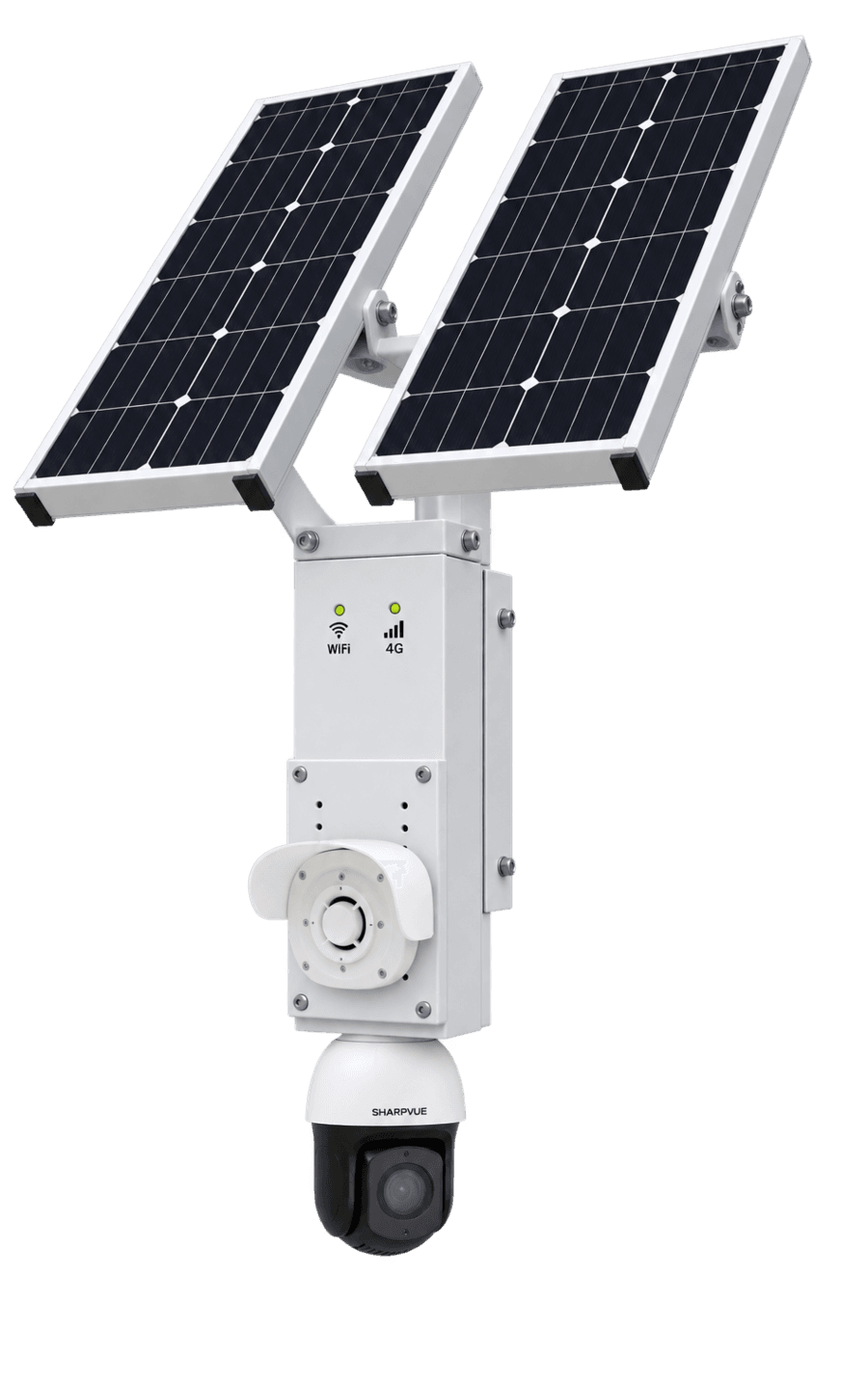 SPSUmicroSolar, 150 W arrayRated Zones 1–3
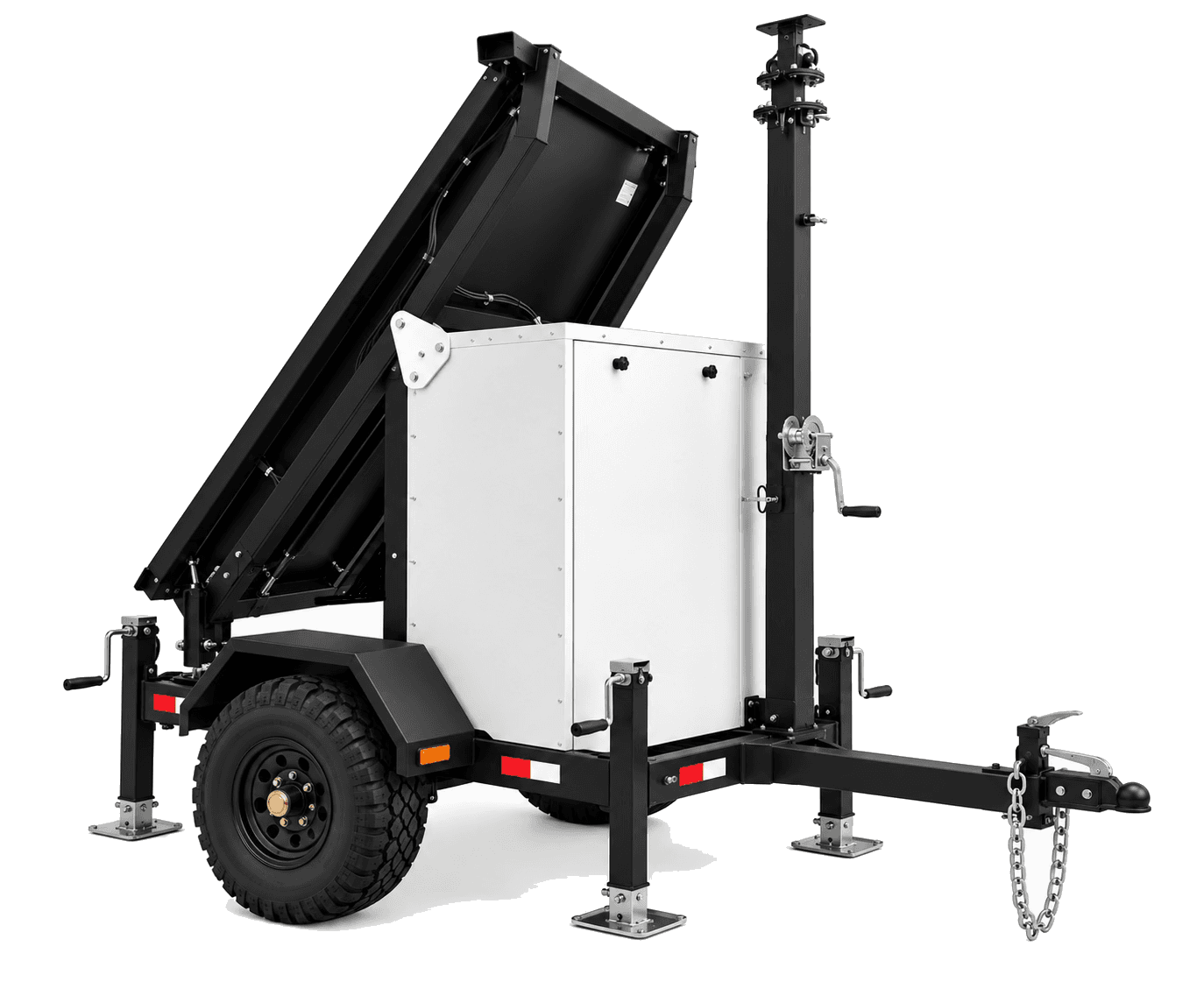 MASTvorpSolar, 550 W arrayRated Zones 1–3
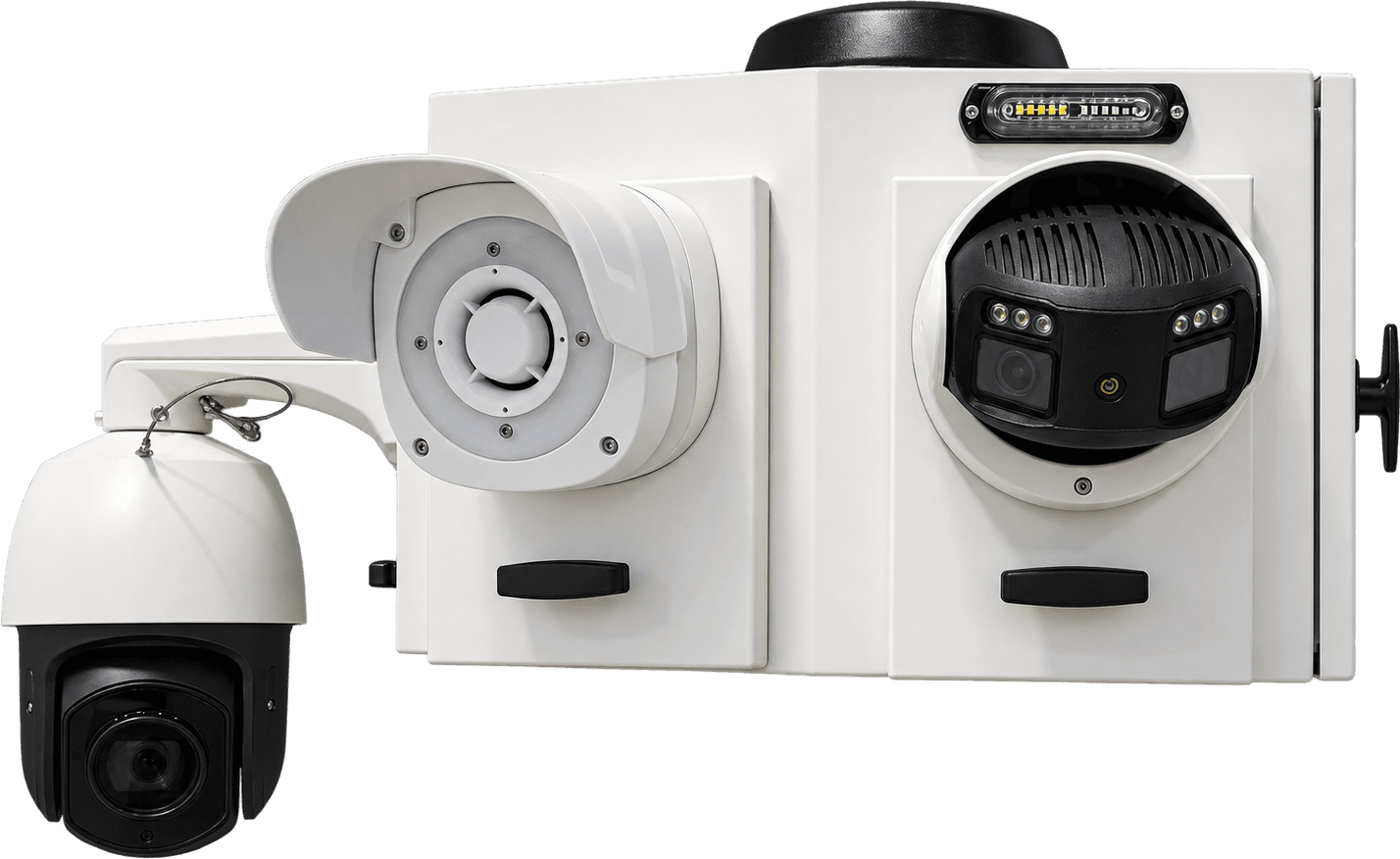 BYOTYour trailer's own powerRated All zones
Every MAST platform sees the same sky: Sharpvue iVISION, Alarm.com for Business or OpenEye, and open RTSP and ONVIF streams to any third-party VMS. One program rule: an OpenEye build in Zone 4 or 5 needs the Sharpvue Generator specifically. For a single pole-mounted unit, see the Solar Portable Surveillance Unit.
- What is a peak sun hour?
- One hour of sunlight at the full strength a solar panel is rated for, 1,000 watts per square metre. Peak sun hours add up a whole day's actual sunlight, weak at dawn and dusk and strongest at midday, and express it as the number of full-strength hours it is worth. Multiply a panel's rated watts by peak sun hours, take off system losses, and you have the day's harvest.
- What are Sharpvue's solar zones?
- Five bands of average daily peak sun hours across the United States, numbered from the sunniest down. Zone 1 is 6.0 or more a day (Arizona, New Mexico). Zone 2 is 5.5 to 6.0 (California, Nevada, Utah, Texas, Oklahoma, Florida, Hawaii, Puerto Rico). Zone 3 is 5.0 to 5.5 (the Southeast, Mid-Atlantic and central plains). Zone 4 is 4.5 to 5.0 (the northern tier and Northeast). Zone 5+ is under 4.5 (Alaska, western Washington, the Idaho panhandle, northwest Montana and northern Michigan). Build a Trailer uses the zone to look up what a given array delivers in the worst month.
- How do I know which zone my site is in?
- Click your state on the map and the configurator takes that state's dominant zone. Zones cross state lines, so near a boundary, or in one of the Zone 5 pockets inside a Zone 4 state, choose the zone directly from the legend. When in doubt, pick the less sunny of the two.
- Can a solar surveillance trailer run in Zone 4 or Zone 5?
- Yes, with a winter plan. In the worst month the array delivers a fraction of what it delivers in the Southwest, so the bank drains slowly through the winter and needs topping up. Sharpvue's rule for Zone 4 and 5 is a Sharpvue Generator feeding the bank through the standard generator input, or a scheduled plug-in recharge every 6 to 10 days through the winter. Where there is an outlet, the AC-powered Portable Surveillance Unit is rated for every zone.
- Why plan on the worst month instead of the annual average?
- A battery bank stores days of energy, not months, so July's surplus does nothing for January. If the array cannot keep up with the load in the darkest month, the bank drains a little every day until the cameras stop, however good the summer was. Sharpvue's sizing table gives the average watts an array delivers around the clock in the worst month for each zone, and Build a Trailer plans on that figure.
- Does a bigger solar array fix a northern site?
- Less than people expect. A 1,600 W array in Zone 5 delivers about 58 W around the clock in the worst month, barely more than a 1,200 W array in Zone 4. Short days, a low sun angle, cloud and snow limit every panel the same way. The levers that work in the north are a smaller load, heated batteries, correct orientation, and a generator or plug-in recharge to bridge the darkest weeks.
Pick your state and let the budget do the math
Build a Trailer looks up your zone, applies the worst-month sizing table to the array and the cameras you choose, and shows runtime, recharge and the winter plan before you request a quote.