Waste Management.
See the fire before there's a flame.
Landfills and transfer stations are absorbing a lithium-ion battery problem they never agreed to take on. A single crushed cell buried in a load can smolder for hours before anyone sees smoke — and by then it's a fire department call, a shutdown, and an insurance conversation. Sharpvue puts bi-spectrum AI thermal on the tipping floor and the working face, detects the temperature rise while it's still a hot spot, and gets a live operator on the phone to your team and the fire authority.
A waste fire doesn't start as a flame. It starts as heat.
Publicly reported fires at North American waste and recycling facilities hit a record 448 in 2025 — up 58% in under a decade — and industry estimates put the real total above 5,000 a year once unreported incidents are counted. The cause is almost always the same: a lithium-ion cell crushed in a load, venting inside a pile. Visible cameras, smoke detectors, and spotters all wait for the fire. Thermal imaging sees the hours of temperature rise that come first, which is the only window in which a hot spot is still a hose-and-a-loader problem instead of a total loss.
See the thermal camera →How waste management operators deploy Sharpvue.
Tipping floor & pit hot-spot detection
Thermal AI watches the floor and pit continuously and flags an abnormal temperature the moment it appears — including overnight, when most ignitions happen and nobody is on site.
Working face & active cell
A mast-mounted thermal camera looks down onto the face rather than across it, catching a hot spot in the middle of a pile instead of only on its silhouette. The trailer repositions as the face advances.
Stored material, bales & quarantine pads
Baled recyclables, ASR, and hot-load quarantine areas sit for days. Continuous thermal trending catches a pile that is slowly self-heating long before it reaches ignition.
After-hours intrusion & arson
Scrap theft and after-hours trespass are a real ignition source at these sites. The same unit delivers AI intrusion alerts, strobe, and live operator voice-down.
Features designed for waste management.
Bi-spectrum — heat and detail in one frame
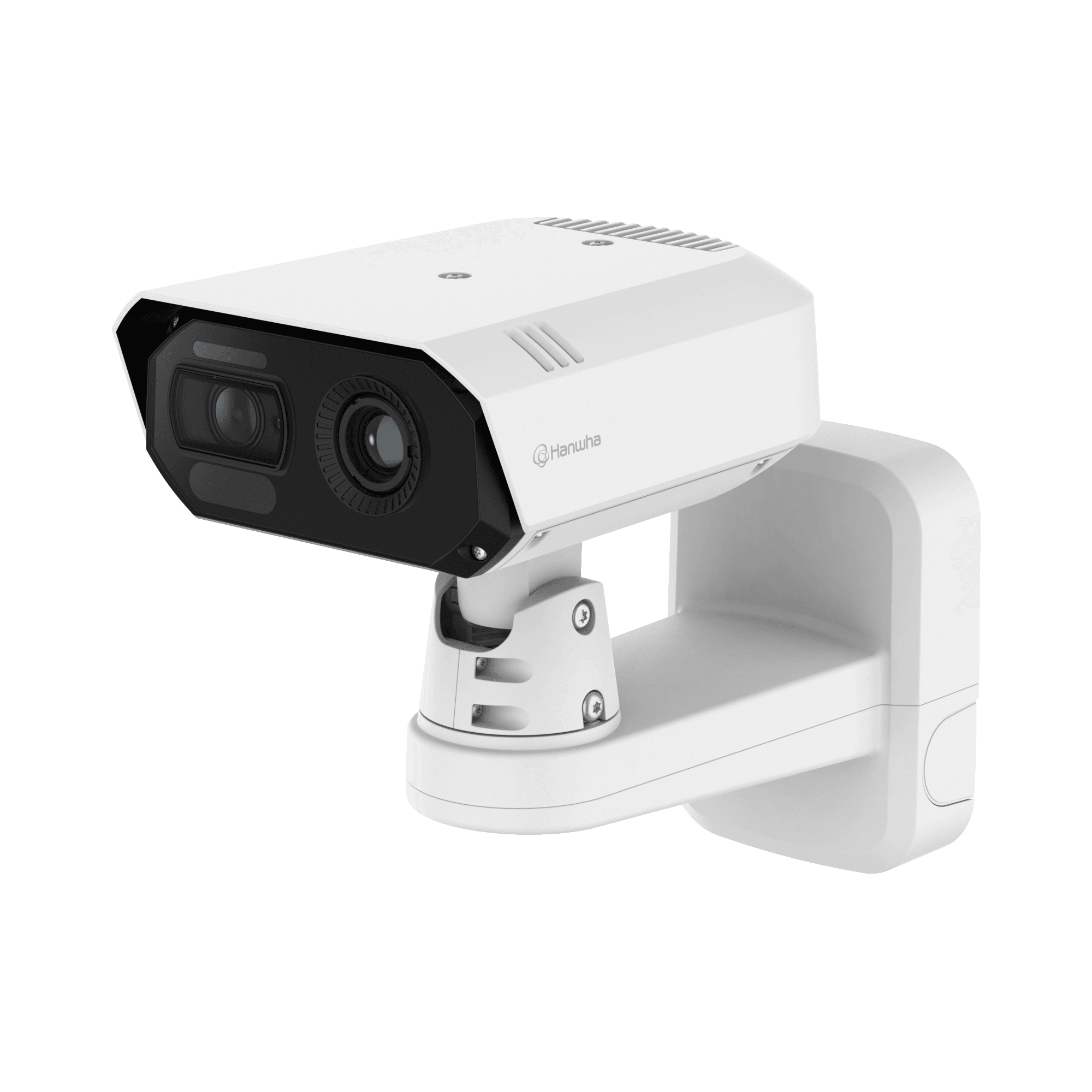
A 640 × 480 thermal sensor and an 8MP visible camera, each with its own AI engine. Thermal flags the anomaly; the 4K channel confirms it in the same pane, so an operator can tell a smoldering hot spot from a hot excavator manifold in seconds.
Abnormal temperature detection
Set a threshold on a zone — tipping floor, face, bale row — and get an alert when it's crossed, with the measured temperature attached to the event.
Sees through dust, smoke and darkness
Tipping floors and working faces are dusty, and most fires start after dark. Thermal needs no light and is not blinded by airborne dust the way a visible camera is.
Deploys with no grid and no trenching
Solar trailers and pole-mounted units cover the parts of a landfill that will never have conduit — and relocate when the site plan changes.
Continuous cloud recording
Every degree is recorded and scrubbable. When an insurer, a regulator, or a fire investigator asks what happened, you have the thermal history instead of a recollection.
Built for the way waste management actually deploys.
- Bi-spectrum thermal + 4K visible confirmation in one camera
- Abnormal temperature alerts on the floor, the face, and stored material
- Solar and AC options — covers sites with no grid power
- Repositions as the working face moves
- 24/7 cloud thermal history for insurers and regulators
- Live operator escalation to your team and the fire authority
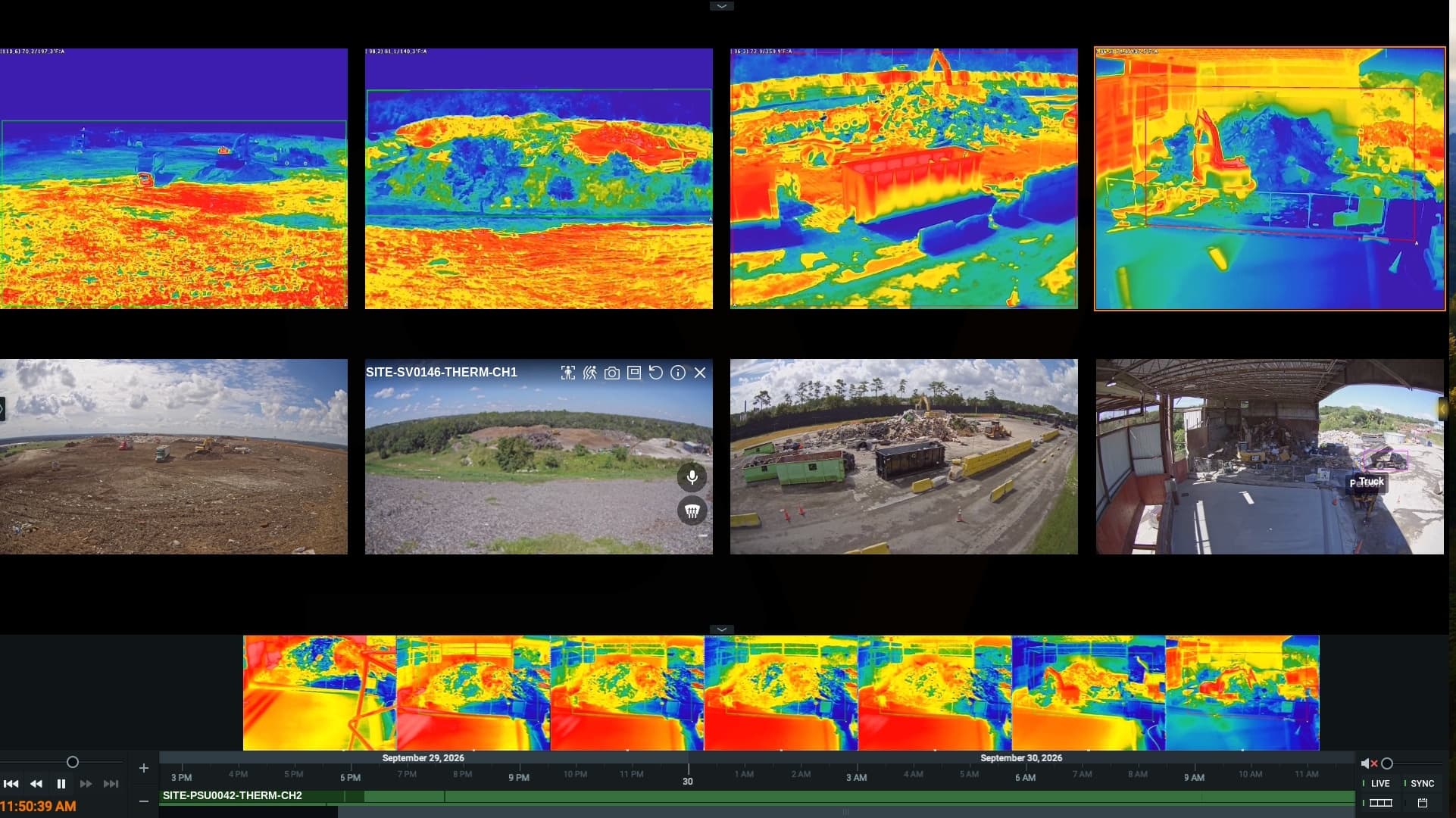
Thermal and visible, side by side, around the clock.
Thermal channels across the working face, the tipping floor, and the roll-off row — each with live temperature readout — paired with the visible view of the same scene. The timeline underneath is continuous thermal recording, so an operator can scrub back through an overnight temperature rise frame by frame and show exactly when a pile started heating.
See remote monitoring →The tipping floor, watched continuously.
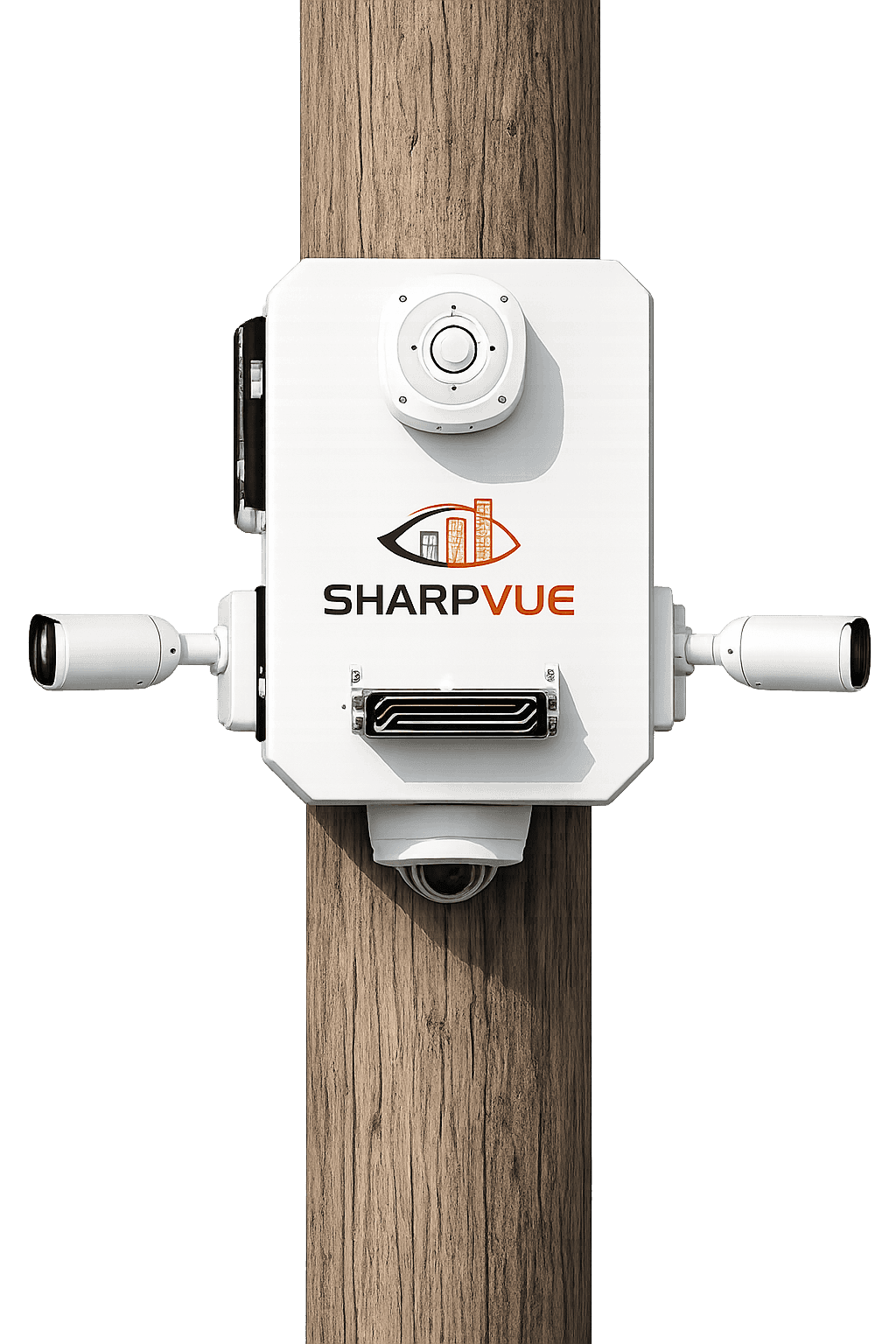
A transfer station has power, a roof, and a pit that needs eyes on it every hour the building is closed. The PSU mounts to a wall or pole, runs on building power with lithium backup so it keeps watching straight through an outage, and feeds PoE to the cameras. Aluminum and stainless, with temperature-controlled cooling, because the atmosphere inside a tipping building eats ordinary enclosures.
Explore the PSU →The face moves. So should the camera.
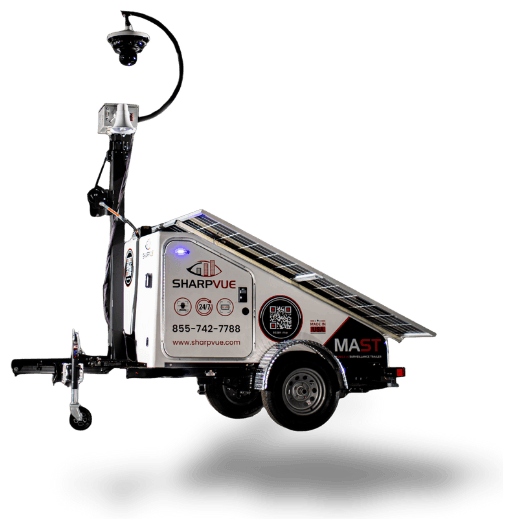
A pole camera aimed at today's tipping area is pointed at finished, covered ground a quarter from now. MAST solves that structurally: a 22-foot mast looking down onto the pile, 1,170 W of solar and 8–10 days of runtime with no grid or generator, and 1,600 lb behind a pickup so the site foreman repositions it as the cell advances — with equipment already on the property.
Explore MAST trailers →Coverage at the back of the property.
Landfills are rural and frequently sit in topographic depressions where a single carrier isn't enough. MAST runs multi-carrier 5G with automatic failover and an optional Starlink uplink, and records continuously to the cloud — so there's no on-site recorder sitting inside the fire zone you're trying to protect.
Evidence your underwriter can actually read.
Property insurance for waste operators has repriced hard, and carriers increasingly want documented detection before they'll quote. An operator who can hand an underwriter a continuous thermal record of their tipping floor — and a log of hot spots caught and resolved — is in a materially different conversation than one who can only describe their procedures.
Talk to our team →The Sharpvue stack for waste management.
Waste Management security, answered.
- Can a thermal camera detect a subsurface landfill fire or elevated temperature event?
- Not directly, and you should be sceptical of anyone who says otherwise. Subsurface elevated temperature events are monitored with in-waste thermocouples and landfill-gas probes, because the reaction is happening under many feet of waste and cover. What a thermal camera does is detect surface expression — hot spots on the working face, the tipping floor, and stored material — which is where battery-driven fires actually start and where early detection changes the outcome.
- How early will it catch a fire compared with what we have now?
- It depends on the pile and the conditions, but the useful comparison is the mechanism. Smoke detection and human spotting react to combustion that has already started. Thermal reacts to the temperature rise that precedes it, which in a smoldering pile is typically a matter of hours rather than minutes. That is the window in which a loader and a hose still solve the problem.
- Won't hot equipment set off constant false alarms?
- That's exactly why we specify a bi-spectrum camera rather than a thermal-only one. Thermal-only gives an operator a coloured blob with no context, which produces false dispatches, then alarm fatigue, then a system nobody trusts. Bi-spectrum shows the heat anomaly and the 4K colour video of the same scene together, so an operator rules out an excavator exhaust or sun-heated steel immediately. Detection zones can also be drawn to exclude traffic lanes and equipment parking.
- Can this run somewhere with no power at all?
- Yes — that's the normal case on a landfill. MAST trailers are solar-charged with 8–10 days of runtime, and pole-mounted solar units cover fixed positions like the scale-house approach or a quarantine pad. Thermal draws more than a standard camera, so we size the power budget for your site and season rather than assuming it, and transfer stations with building power use the AC-powered PSU instead.
- Who gets the alert when a hot spot is detected?
- Whoever you want, and optionally our monitoring centre. With remote monitoring, a live operator verifies the thermal event against the visible channel, then calls your site contact and — when it's confirmed — the fire authority, with a camera location, a measured temperature, and video. iVISION has no per-seat licensing, so your operations manager, EHS director, corporate risk team, and monitoring centre can all be in the same feed during an event.
Your data stays yours.
Some surveillance providers pool footage and vehicle data across their entire customer network. Sharpvue doesn't. Every unit works for one customer — yours.
- Private to your account
- Video and events are isolated to the customer the unit is deployed for. Footage is never pooled, never shared across accounts, and never sold.
- Detection, not recognition
- Sharpvue AI flags that a person, vehicle, or license plate is present so events stand out. It does not read, store, or share plate numbers.
- No plate database
- There is no shared license-plate database behind Sharpvue units — no cross-customer lookup network and no third-party data feeds.
Read more in our privacy policy.
See Sharpvue on your waste management site.
Tell us about the property and we'll scope the right mix of cameras, trailers, and monitoring.