Law Enforcement.
Mobile deployments. Evidence-grade footage. Surge capacity.
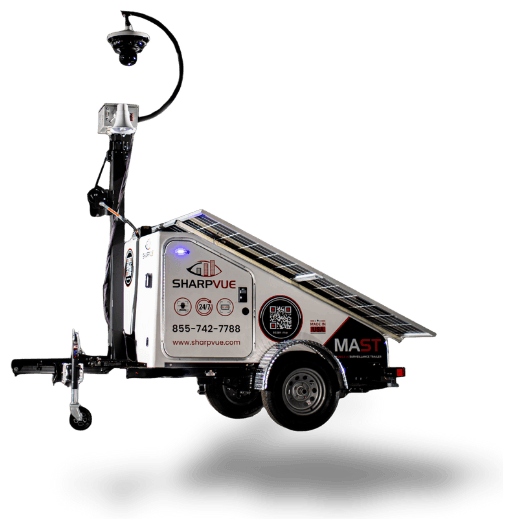
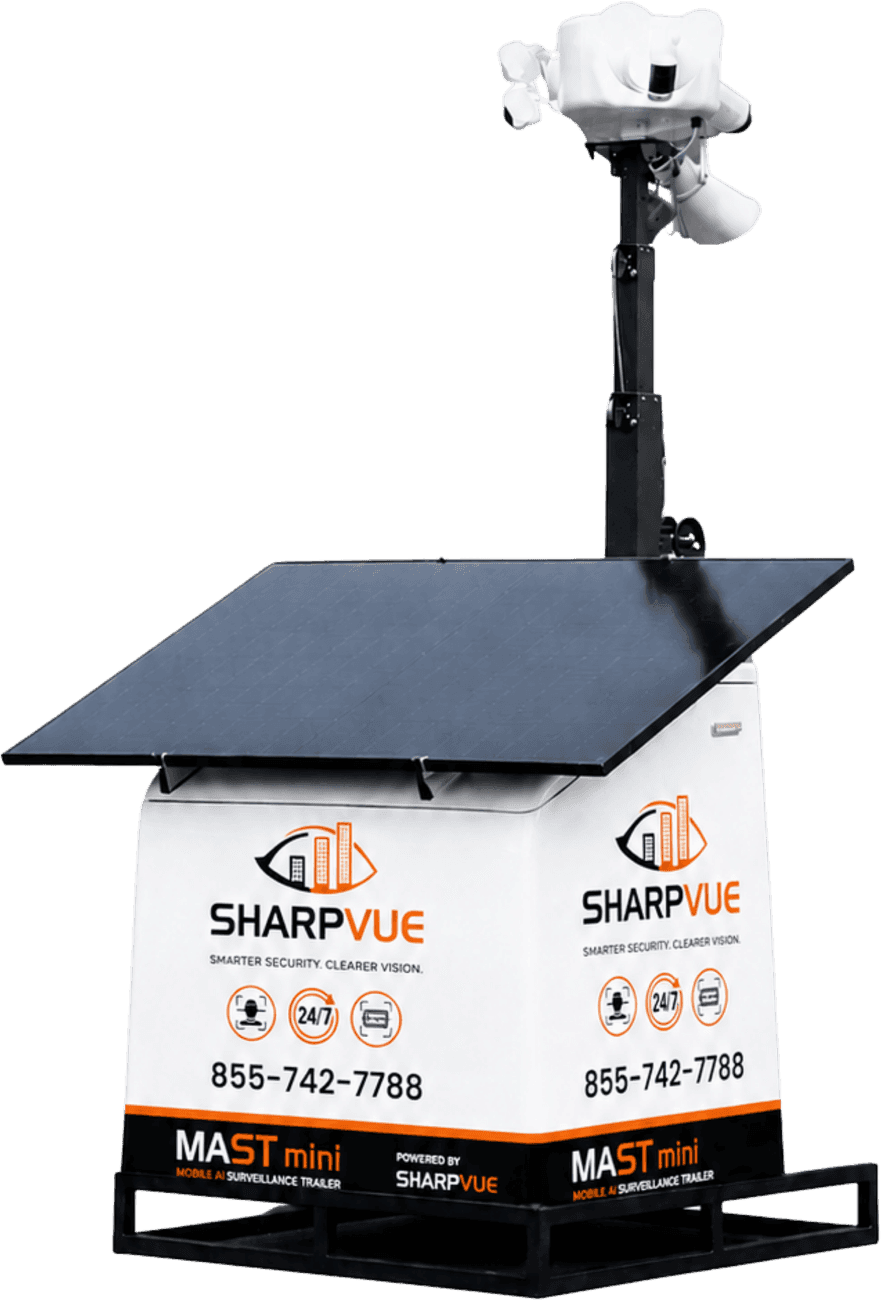
Law enforcement agencies need surveillance that's deployable today, court-admissible tomorrow, and re-locatable to wherever the operation moves next. Sharpvue MAST is purpose-built for the field — solar, satellite, AI, and the iVISION VMS in one trailer.
How law enforcement operators deploy Sharpvue.
Special events & rallies
Pre-position MAST for protests, festivals, and large gatherings with full coverage and live monitoring.
High-crime area saturation
Drop MAST in known hotspots for visible deterrence + AI evidence capture.
Construction & lot security
Secure municipal property, motor pools, and impound lots without trenching.
Disaster response & emergency
Self-powered deployment to areas with damaged grid infrastructure.
Built for the way law enforcement actually deploys.
- Evidence-grade footage with audit trail
- Self-powered for grid-down events
- Made in the USA — agency procurement-ready
- Real-time alerts an officer can act on, not a morning-after video pull
- Unlimited users — share a view across overlapping jurisdictions
Deployed, and written about.
Irmo is set to install more security cameras to combat crime
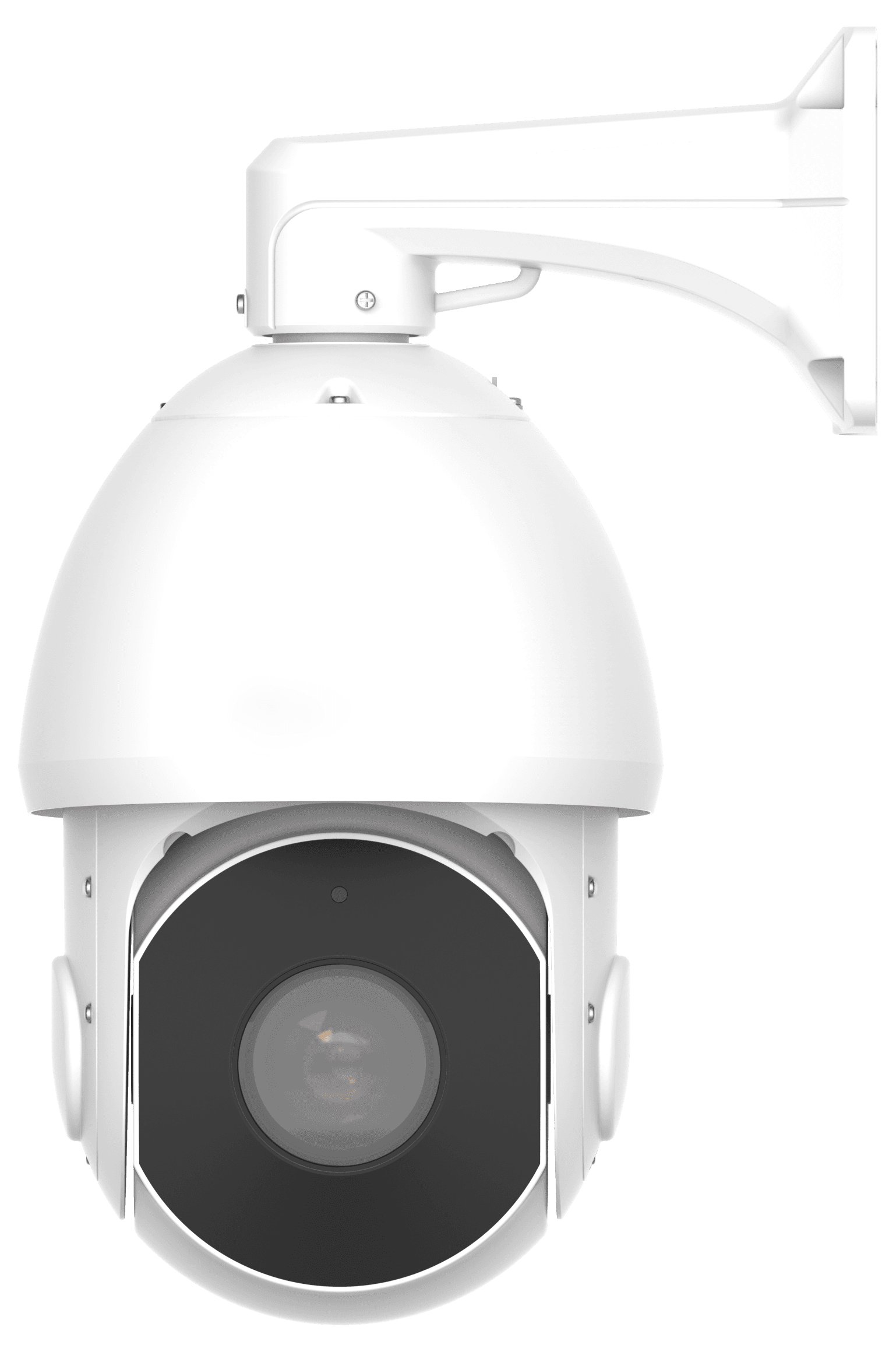
Read the articleIrmo Town Council voted to contract Sharpvue to install five 5MP IR vandal-dome cameras with varifocal lenses along the Columbia Avenue corridor, near the Beacon Hill and Carmel Commons neighborhoods. It followed six license-plate cameras the town had already put in the year before, and it was aimed at a stretch of the Midlands where four agencies’ jurisdictions overlap and residents had spent a year asking for coverage.
“They can’t have eyes everywhere all the time. This helps them — give them real-time alerts where they can see the alert, get over to Beacon Hill, respond a little bit better.”
The Sharpvue stack for law enforcement.
Law Enforcement security, answered.
- We can't put an officer on every corner. What does a camera actually add?
- Attention that doesn't get tired. Edge AI watches every camera continuously and pushes a real-time alert the moment a person or vehicle trips a rule you've defined — a closed lot after hours, a cut-through, a loading area. As we told the Lexington County Chronicle about the Irmo deployment: a department “can’t have eyes everywhere all the time,” so the system gives officers something to respond to while it's still happening, instead of a video pull the next morning.
- What is video verification, and why do agencies care about it?
- It's the ability to look at the event before you commit a unit to it. An alert arrives with live video attached, so a dispatcher or an officer can see whether it's a break-in or a raccoon. “Video verification is a powerful tool that can ultimately save the department money from running a couple of squad cars to a scene that they don’t need to be,” is how we put it to the Chronicle — and it works the other way too: when it is real, the responding officer already knows what they're walking into.
- How long is footage retained, and who owns it?
- The agency owns it. Footage records continuously to your cloud on a retention window you set — Irmo runs 30 days — after which recordings age out automatically and only clips that were flagged, exported, or attached to a case are kept. Exports carry an audit trail showing who pulled what and when.
- Do the cameras have to go on utility poles?
- No, and it's worth planning as though they can't. Irmo intended to attach to Dominion Energy poles to hold costs down and ran into the utility's moratorium on pole attachments, so the cameras went on decorative poles with power run to them instead. Where power or pole access is the blocker entirely, a solar MAST trailer or a Portable Surveillance Unit puts the same cameras and the same platform on the street without trenching or a utility agreement.
- What does it cost to run after the cameras are installed?
- Two ongoing line items: the software platform and the cellular service the cameras use to reach it. Both are predictable monthly costs, quoted up front alongside the hardware and installation, and there's no per-seat licensing — adding another sergeant, another shift, or a neighboring agency to the view doesn't change the bill.
- Should we start with license-plate cameras or fixed cameras?
- They answer different questions, and most agencies end up with both. License-plate recognition tells you which vehicles moved through a corridor and when. Fixed cameras — vandal-resistant domes with varifocal lenses, so the field of view is set to the scene rather than the mounting position — tell you what actually happened and give you the images a case needs. Irmo did LPR first, then added fixed coverage to the same corridor.
- Can neighboring agencies see the same footage?
- Yes, and in overlapping-jurisdiction areas that's often the whole point. Access is role-based and granted per user, so a town PD, a county sheriff's office, a school district, and a property manager can each be given exactly the cameras and the permissions they should have — without copying files around or handing out a shared password.
- How fast can we cover a hot spot while a permanent install is being planned?
- Days, not budget cycles. A MAST trailer tows in, raises its mast, and is live on solar and 5G the same day — no trenching, no permits, no utility coordination. Agencies routinely use one to hold a problem area while the fixed installation is scoped, funded, and built, then relocate it to the next one.
- Is the footage usable in court?
- It's recorded continuously, time-synced across cameras, and exported with an audit trail and original-file integrity intact, so chain of custody holds up. Cameras are NDAA Section 889 compliant and made in the United States, which also clears the procurement side for agencies spending federal or grant dollars.
Your data stays yours.
Some surveillance providers pool footage and vehicle data across their entire customer network. Sharpvue doesn't. Every unit works for one customer — yours.
- Private to your account
- Video and events are isolated to the customer the unit is deployed for. Footage is never pooled, never shared across accounts, and never sold.
- Detection, not recognition
- Sharpvue AI flags that a person, vehicle, or license plate is present so events stand out. It does not read, store, or share plate numbers.
- No plate database
- There is no shared license-plate database behind Sharpvue units — no cross-customer lookup network and no third-party data feeds.
Read more in our privacy policy.
See Sharpvue on your law enforcement site.
Tell us about the property and we'll scope the right mix of cameras, trailers, and monitoring.